
Why More Intelligent People Are Quietly Stepping Away From Internet Culture
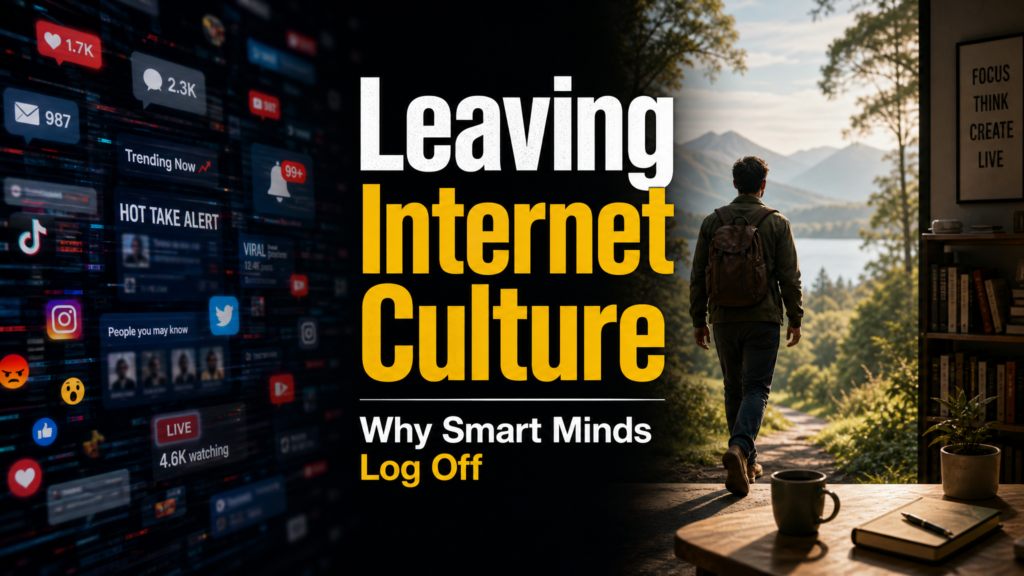
Something is changing in the way thoughtful people relate to the internet. They are not always announcing it. They are not deleting every account in one dramatic weekend. But many of them are quietly stepping back from internet culture because the noise, speed, and emotional overload no longer feel normal. Or maybe they never really were normal to begin with.
Internet culture promised connection, information, entertainment, and endless access. In some ways, it delivered all of that. But it also created a strange kind of modern exhaustion. People are constantly informed but rarely settled. Constantly stimulated but rarely focused. Constantly connected but often emotionally scattered.
Why Internet Culture Feels So Draining
One of the biggest problems with internet culture is that it never really leaves people alone. Every platform wants a reaction. Every feed invites comparison. Every trend demands emotional participation. Be angry. Be impressed. Be entertained. Be updated. Be available. Be seen. Repeat.
That creates a brain environment where rest becomes difficult. Even downtime starts feeling crowded. People watch shows while checking comments about the show. They read articles while switching tabs. They sit with family while half-listening to notifications. Over time, internet culture trains the mind to expect constant fragmentation.
For some people, especially those who value depth, reflection, and real concentration, that environment starts to feel unbearable. Not because they hate technology, but because they can feel what it is doing to their attention.
Smart People Are Not Always Offline. They Are More Selective.
Stepping away from internet culture does not always mean leaving the internet completely. In many cases, it means becoming more intentional. Using tools without living inside them. Reading without doomscrolling. Posting without performing. Staying informed without feeding every algorithm with emotional energy.
That selectiveness is often a sign of maturity, not disconnection. Intelligent people tend to notice patterns earlier. They notice when their attention span is shrinking. They notice when online discourse becomes repetitive, shallow, or manipulative. They notice when too much exposure to internet culture starts affecting mood, creativity, or self-respect.
What People Are Looking for Instead
Usually, they are not running toward boredom. They are running toward clarity. More reading. More real-life conversation. More focus. More silence. More time to think before reacting. More room for taste, thought, and identity to develop outside the pressure of the feed.
That is the quiet rebellion against internet culture. It is not dramatic. It is deeply personal. A person chooses a book over endless short-form noise. A walk over another hour online. A thoughtful conversation over a comment war. A private life over constant digital performance.
And once people feel the difference, it becomes hard to ignore. The mind feels less crowded. The day feels less hijacked. The nervous system feels less pulled in ten directions at once. That is why many people do not return to internet culture in the same way after they create even a little distance from it.
How to Step Back Without Disappearing
- Turn off nonessential notifications.
- Stop opening apps the moment you wake up.
- Pick one or two platforms instead of trying to live on all of them.
- Create phone-free zones during meals, reading time, or rest.
- Replace some screen time with slow, offline habits that help you think.
The goal is not perfection. The goal is a better relationship with attention. Internet culture becomes less powerful when it is no longer the default setting for every empty moment.
A Quieter Life Is Not an Empty Life
Many people are finally realizing that less noise does not mean less meaning. In fact, it often means the opposite. When the volume of internet culture goes down, your own mind becomes easier to hear. Your taste becomes clearer. Your conversations get better. Your energy becomes less reactive and more deliberate.
This is not about acting superior or pretending to be above modern life. It is simply about noticing what helps you stay human. Sometimes the smartest thing a person can do is log off long enough to remember what their mind feels like without constant interruption.
At Contact Mee, we create thoughtful content for people who want more clarity, more depth, and less digital noise. If that sounds like you, stay connected and explore more through the links below.