
Micro Habits for Anxiety: Small Daily Shifts That Can Calm an Overactive Mind
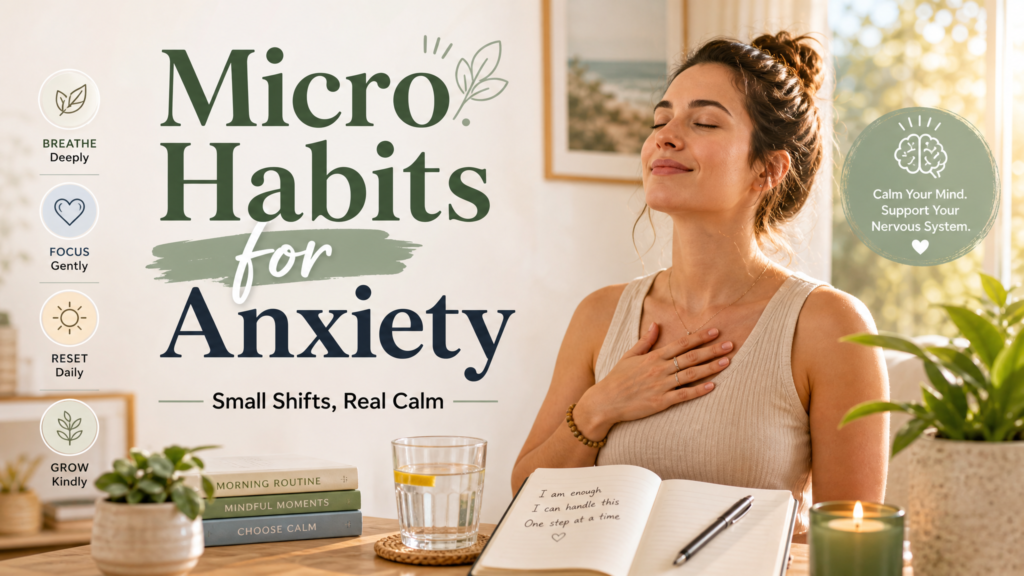
Anxiety does not always look dramatic from the outside. A person can still go to work, answer messages, make plans, and seem completely fine while their mind runs nonstop in the background. That is why micro habits for anxiety can be so powerful. They do not require a total life reset. They work by gently changing the nervous system through small, repeatable actions.
When people feel anxious, they often search for one huge answer. A perfect routine. A major breakthrough. A complete transformation overnight. But in real life, healing often happens through much smaller moments. That is the beauty of micro habits for anxiety. They are realistic enough to do on hard days, and simple enough to repeat until they start changing how your body responds to stress.
Why Small Habits Work So Well
Big goals can overwhelm an already anxious brain. When you are mentally overloaded, even healthy advice can sound exhausting. Drink more water. Fix your sleep. Meditate daily. Journal every morning. Exercise five times a week. None of those ideas are bad, but when anxiety is high, too much pressure can become one more thing to fail at.
Micro habits for anxiety work differently. They lower resistance. They create tiny moments of safety, control, and physical grounding. One minute of slow breathing. Splashing cold water on your face. Writing down one looping thought. Stepping outside for sunlight. Stretching your shoulders before opening your phone. These actions seem small, but they give the brain a different pattern to follow.
That is what makes micro habits for anxiety so effective. They do not try to overpower the nervous system. They help regulate it.
7 Simple Micro Habits Worth Trying
- Cold water reset: splash cold water on your face for a fast grounding cue.
- Breath check: take one long exhale before responding to stress.
- Thought dump: write the anxious thought exactly as it sounds in your head.
- Doorway pause: stop for five seconds before rushing into the next task.
- Morning light: get natural light early in the day to support regulation.
- Phone delay: wait ten minutes after waking before checking notifications.
- Body release: unclench your jaw, drop your shoulders, and relax your hands.
None of these micro habits for anxiety are meant to magically erase stress. Their job is to interrupt the automatic cycle. Anxiety often feeds on speed, tension, and unconscious repetition. Tiny habits help bring awareness back into the body.
What Actually Changes Over Time
The first change is usually not dramatic calm. It is awareness. You start noticing your patterns faster. You realize when your body is bracing. You catch the moment before a spiral gets bigger. That alone is progress.
Then something even better starts happening. The small actions no longer feel forced. They begin to feel familiar. That is when micro habits for anxiety become part of your life instead of a temporary experiment. The nervous system learns through repetition, not intensity. Consistency matters more than doing everything perfectly.
This is also why self-judgment has to stay out of the process. If you turn healing into another pressure system, you miss the point. Micro habits for anxiety are not about becoming flawless. They are about becoming steadier, kinder, and less ruled by panic.
The Goal Is Not Perfection. It Is Capacity.
People with anxiety often think they need to feel calm all the time to be doing well. That is not realistic. The real goal is to build more capacity. More space between the trigger and the reaction. More awareness in the body. More trust that difficult moments can pass without taking over the entire day.
That is exactly where micro habits for anxiety shine. They build support quietly. They help the brain feel less trapped and the body feel less constantly under attack. The shifts may be small, but the long-term effect can be surprisingly deep.
Start Small Enough That You Will Actually Continue
If you want to try micro habits for anxiety, start with one. Not seven. Not a perfect wellness routine. Just one habit that feels doable on your hardest day. Let it become familiar. Then add another. That is how real change tends to last.
At Contact Mee, we believe simple shifts often create the most honest kind of growth. If you want more grounded reads about mental clarity, modern stress, and emotional well-being, stay connected with us below.