
When Discipline Fails: 6 Better Ways to Stay Consistent Without Burning Out
Most of us were taught the same thing: when discipline starts slipping, the answer is to push harder. Be stricter. Try more. Ignore the resistance and force yourself through it. But if that approach actually worked, so many people wouldn’t feel exhausted, guilty, and stuck every time they fall out of a routine.
The truth is, discipline doesn’t always fail because you’re lazy or unmotivated. Sometimes it fails because the way you’re trying to stay consistent simply isn’t working for your body, your energy, or your real life anymore. And that changes everything.
This article breaks down six powerful mindset shifts from a thoughtful video by Veronika Mark, where she explains why forcing yourself harder often backfires — and what to do instead if you want consistency that actually lasts.
When discipline starts falling apart, it may not be a character flaw. It may be a signal that something about your system needs attention.
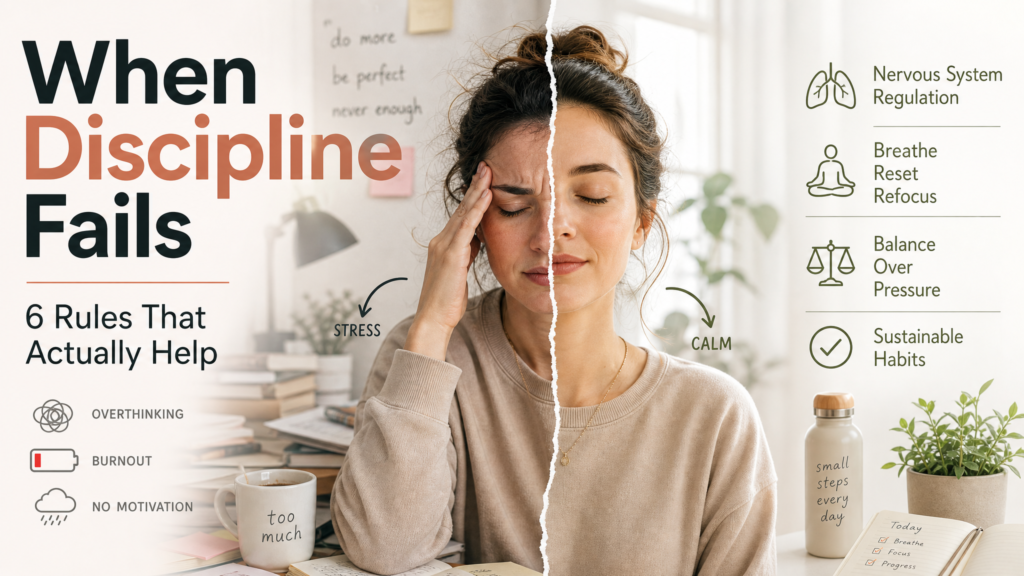
What This Video Is Really About
At its core, this video is about rethinking discipline in a healthier, more sustainable way. Instead of treating every struggle like a personal failure, it invites people to get curious about what’s really going on underneath the surface.
It’s not a “work harder” message. It’s a “work smarter, softer, and more honestly” message. The speaker connects consistency with things many people ignore: nervous system regulation, stress, sleep, emotional overload, perfectionism, and the need for support.
That’s what makes this message hit differently. It doesn’t shame people for struggling. It helps them understand why they’re struggling in the first place. [Source](https://www.youtube.com/watch?v=lcJo-SQDJlI)
What the Audience Takes Away From It
Anyone who has ever started a habit with good intentions and then slowly watched it fall apart will probably see themselves in this video. The message is reassuring but honest: if discipline keeps breaking down, that doesn’t automatically mean you need more pressure. It may mean you need a better approach.
- Falling out of a routine does not automatically mean you’re lazy.
- Stress can weaken focus, self-control, and follow-through.
- Your body and nervous system affect your consistency more than most people realize.
- Small, repeatable action beats intense effort you can’t maintain.
- Perfectionism drains motivation instead of building it.
- Better sleep, food, rest, and real connection matter more than people admit.
- Asking for help can protect consistency, not weaken it.
The 6 Rules That Make More Sense Than “Just Try Harder”
1. Treat Discipline Failure as a Signal, Not a Verdict
One of the strongest ideas in the video is that discipline failing is not proof that something is wrong with you. It’s information. That shift alone can take a huge amount of shame out of the equation.
When people can’t stick to a habit, they often spiral fast. They assume they’re weak, uncommitted, or somehow broken. But this video argues for a different response: pause, step back, and get curious. What changed? What feels off? Why does this routine suddenly feel heavy?
That mindset matters because self-judgment usually makes things worse. Curiosity creates room for insight. Shame usually creates more shutdown. [Source](https://www.youtube.com/watch?v=lcJo-SQDJlI)
2. Regulate First, Act Second
This may be the most practical lesson in the whole video. If you’re dysregulated, overwhelmed, or mentally fried, trying to force discipline on top of that can turn even simple habits into a battle.
The speaker explains that under stress, the brain areas responsible for rational decision-making and self-control become less effective. That’s why pushing through stress with even more pressure often doesn’t lead to better results. It just creates more resistance.
Instead, she recommends regulating the body first. That could mean breathwork, yoga, movement, cold water, stepping away from screens, or simply doing something that helps your system feel safer and calmer. Once your system settles, taking action becomes much easier.
You don’t always need more force. Sometimes you need a calmer state before you can follow through.
3. Scale Back Instead of Quitting
A lot of people live in all-or-nothing mode. If they can’t do the full routine, they do nothing at all. This video pushes back on that idea in a really grounded way.
The speaker shares a personal example from her yoga practice. Instead of quitting when the full version became too much, she scaled back. That smaller version helped her keep going, enjoy the practice again, and eventually build back up from a healthier place.
That’s a smart reminder for anyone trying to stay consistent. If your workout routine is too much, shorten it. If your writing routine feels impossible, lower the bar and keep the rhythm alive. A smaller habit you can actually repeat is far more powerful than a perfect plan you abandon after one hard week. [Source](https://www.youtube.com/watch?v=lcJo-SQDJlI)
4. Drop Perfectionism Before It Drains You
Perfectionism often disguises itself as high standards, but in real life it can become one of the fastest ways to burn out. If everything has to be done at 100 percent, then normal human inconsistency starts to feel like failure.
That mindset makes habits harder to sustain because there’s no room for real life. No room for tired days. No room for a messy week. No room for showing up at 50 percent and still letting that count.
The video makes an important point here: when nothing ever feels good enough, your brain never gets the sense of reward that helps motivation continue. That moving finish line is exhausting. Consistency grows faster when people allow themselves to be imperfect and still keep going.
5. Protect the Basics
This part of the video brings the conversation back down to real life. Before assuming you need more discipline, check your foundation. Are you sleeping enough? Eating well? Constantly overstimulated? Spending all day on screens? Running on empty?
Those things matter more than people like to admit. When the basics are off, self-control becomes harder. Focus gets weaker. Stress goes up. Everything starts to feel like a fight.
That’s why this rule lands so well: discipline doesn’t exist in a vacuum. It sits on top of your health, your energy, your rest, your relationships, and your environment. If the foundation is cracked, the routine won’t hold for long.
6. You Don’t Have to Do It Alone
The final lesson may be the one people resist the most. Many adults were raised to believe that needing help means weakness. But the video makes a strong case for the opposite.
Support can actually protect consistency. Talking to a teacher, coach, friend, mentor, or someone who understands what you’re going through can help you adjust the plan before you completely burn out. It can also reduce the emotional weight you’ve been carrying by yourself.
There’s something powerful about being reminded that you were never meant to white-knuckle every hard thing alone. Real support can help people stay engaged, stay grounded, and stay in the process longer. [Source](https://www.youtube.com/watch?v=lcJo-SQDJlI)
Why This Message Feels So Relevant Right Now
So many people are trying to build better habits while living in overstimulating environments. They’re sleeping less, scrolling more, feeling more pressure, and expecting themselves to stay focused through sheer willpower. That’s a hard way to live.
This video offers a much more human approach. It reminds people that consistency is not just about discipline. It’s about capacity. It’s about sustainability. It’s about knowing when your system needs less intensity and more support.
And honestly, that’s a message a lot of people need to hear right now.
Watch the Full Video Here
Your readers can watch the original video directly inside the article without needing to leave the page.
Contact Mee Highlights
If you enjoy thoughtful content around self-improvement, focus, emotional balance, and real-life consistency, explore more through Contact Mee Highlights.
Final Thought
If discipline has been feeling harder lately, maybe the answer isn’t to become harsher with yourself. Maybe the better question is whether your current approach still fits the life, energy, and emotional reality you’re living in right now.
There’s a big difference between building a habit and punishing yourself in the name of progress. The more honest you are about that difference, the easier it becomes to build consistency that actually lasts.
Inspired by the video “6 Rules I Follow When Discipline Is Failing” by Veronika Mark.